
Hiking Tips
| August 28, 2026
| 10 min read
What to Pack for a Day Hike: The Complete Beginner's Checklist
Published by Dusk & Trail
Planning your first day hike can be exciting, but knowing what to pack can feel overwhelming.
Do you need special hiking gear? How much water should you bring? What happens if the weather changes? What if you get lost or your phone battery dies?
The good news is that you don’t need to carry a huge backpack filled with expensive equipment for most day hikes.
You simply need to be prepared for the trail, the weather, and unexpected situations.
This beginner-friendly day hike packing list covers the essentials you should consider before heading out.
The goal isn’t to pack everything. It’s to pack what you need to stay safe, comfortable, and prepared.
Let’s get started.
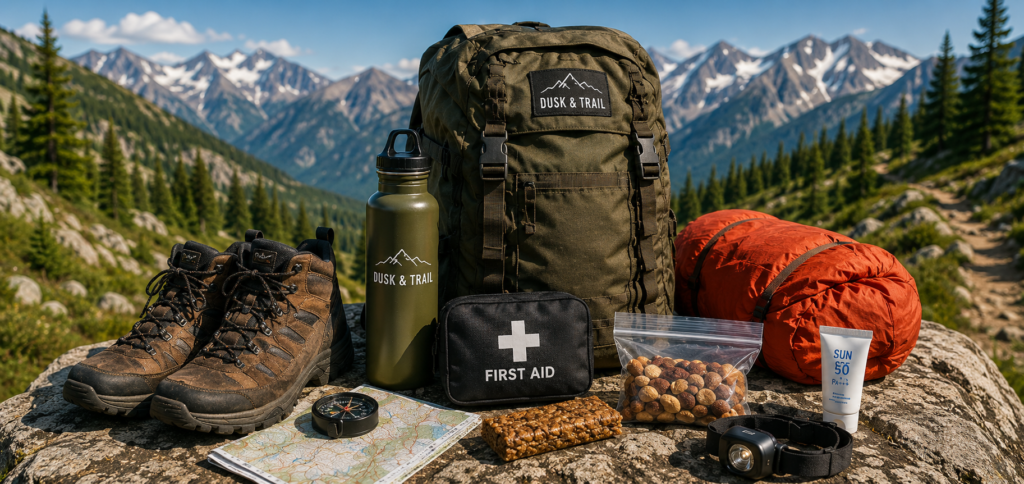
1. 💧 Water
Water should be one of the first things you think about when preparing for a hike.
Even a relatively short trail can become physically demanding, especially in warm or sunny conditions.
How much water you need depends on several factors, including:
- • The length and difficulty of the hike.
- • Temperature and weather conditions.
- • Elevation gain.
- • Your personal hydration needs.
- • Whether there are reliable water sources along the trail.
If you’re unsure, it’s better to plan ahead rather than assume you’ll find water along the way.
A reusable water bottle or hydration reservoir can make carrying water easier and more convenient.
Beginner tip: Don’t wait until you’re extremely thirsty before drinking. Take regular small drinks throughout your hike.
2. 🥪 Food and Snacks
Even if you expect to finish your hike within a few hours, bringing some food is a good idea.
Hiking requires energy, and your needs may increase depending on the distance, terrain, and elevation.
Good hiking snacks can include:
- • Nuts and trail mix.
- • Energy bars.
- • Fresh or dried fruit.
- • Sandwiches.
- • Crackers.
- • Other foods that are easy to carry and won't spoil quickly.
Bring enough food for your planned hike and consider carrying a little extra in case the hike takes longer than expected.
You don’t have to turn your backpack into a picnic basket. Choose foods that are lightweight, practical, and easy to eat on the trail.
3. 🗺️ Navigation
Knowing where you’re going is just as important as having enough food and water.
Before leaving, familiarize yourself with the route and download any maps you might need.
Your navigation options can include:
- • Your smartphone with offline maps.
- • A physical trail map.
- • A GPS device.
- • Trail markers and signs.
However, don’t rely entirely on your phone.
A phone can run out of battery, become damaged, or lose reception. Having another way to understand your route can be extremely useful.
Before starting your hike, check the trail distance, elevation gain, difficulty, and expected hiking time.
4. 🩹 A Small First-Aid Kit
You don’t need a large medical kit for an ordinary day hike, but a few basic supplies can make a big difference.
Consider carrying:
- • Adhesive bandages.
- • Blister treatment.
- • Antiseptic wipes.
- • Gauze.
- • Medical tape.
- • Any personal medication you may need.
Blisters are particularly common among hikers, especially when wearing new footwear.
A small first-aid kit takes up very little space but can be extremely useful when something unexpected happens.
5. 🌦️ Weather Protection
Weather conditions can change quickly, especially in mountainous or exposed areas.
Before leaving, check the forecast and consider how conditions might change during your hike.
Depending on the weather and location, you may want to bring:
- • A lightweight rain jacket.
- • An extra warm layer.
- • A hat.
- • Sunglasses.
- • Sunscreen.
- • Gloves or other cold-weather accessories.
Don’t dress only for the conditions you see when you leave home.
If you’re going somewhere where temperatures can change significantly, pack an extra layer even if you don’t think you’ll need it.
6. 🥾 Comfortable and Appropriate Footwear
Your feet carry you through the entire hike, so footwear deserves special attention.
For an easy, well-maintained trail, comfortable athletic shoes may be sufficient. More challenging or rocky trails may require footwear with better grip, stability, and protection.
Whatever you choose, make sure your footwear:
- • Fits properly.
- • Is comfortable.
- • Provides appropriate traction.
- • Is suitable for the terrain.
- • Has been broken in before a long hike.
Avoid wearing brand-new footwear for your first long hike.
A painful blister can quickly turn an enjoyable adventure into an uncomfortable walk back to the trailhead.
7. 🔦 Emergency Essentials
Most hikes go exactly as planned.
But experienced hikers know that it’s worth preparing for situations that don’t.
A few lightweight emergency items can be useful, particularly if you’re hiking somewhere remote or staying out later than expected.
Consider carrying:
- • A small flashlight or headlamp.
- • An emergency blanket.
- • A whistle.
- • A power bank.
- • A lighter or other appropriate emergency equipment.
A headlamp is especially useful because daylight can disappear faster than expected.
Even if your plan is to finish before sunset, an unexpected delay could leave you walking in low light.
8. 📱 Your Fully Charged Phone
Your phone can be one of the most useful tools in your backpack.
Before leaving:
Charge it fully.
Then consider using it for:
- • Offline maps.
- • Navigation.
- • Weather information.
- • Emergency communication.
- • Taking photos.
- • Keeping important contact information accessible.
If you’re going on a longer hike, a small power bank can provide extra peace of mind.
But remember: technology should support your preparation, not replace it.
Know your route before you start.
9. 🎒 A Comfortable Daypack
You don’t need a huge backpack for a typical day hike.
A comfortable daypack should have enough space for your essentials while distributing the weight comfortably.
When choosing a backpack, consider:
- • Capacity.
- • Comfort
- • Adjustability.
- • Weather resistance.
- • Organization.
- • Weight.
Try to avoid packing unnecessary items simply because you have extra space.
A lighter backpack generally makes the hike more enjoyable.
Pack smart, not heavy.
10. 🗑️ A Small Bag for Your Rubbish
One of the easiest ways to respect a trail is to leave it exactly as you found it.
Bring a small bag for:
- • Food wrappers.
- • Tissues.
- • Empty containers.
- • Other personal rubbish.
Don’t leave anything behind.
And if you notice small pieces of rubbish along the trail and can safely carry them out, consider picking them up too.
Every hiker has a role in keeping outdoor spaces clean.
11. 🌲 Check the Trail Before You Leave
Your packing list isn’t the only thing you should prepare.
Before leaving home, check the trail itself.
Look for information about:
- • Trail closures.
- • Weather.
- • Recent conditions.
- • Distance.
- • Elevation.
- • Difficulty.
- • Estimated hiking time.
- • Water availability.
- • Potential hazards.
A trail that was easy last weekend might be very different after heavy rain, snow, or extreme heat.
Good preparation starts before you reach the trailhead.
🥾 Printable Day Hike Checklist
Before you leave, run through this quick checklist:
Essential
- ☐ Water
- ☐ Food and snacks
- ☐ Navigation / offline map
- ☐ Phone
- ☐ First-aid kit
- ☐ Appropriate footwear
- ☐ Weather protection
Safety
- ☐ Emergency light/headlamp
- ☐ Whistle
- ☐ Power bank
- ☐ Emergency blanket
- ☐ Personal medication
Comfort
- ☐ Comfortable backpack
- ☐ Extra clothing layer
- ☐ Hat
- ☐ Sunglasses
- ☐ Sunscreen
Responsible hiking
- ☐ Rubbish bag
- ☐ Leave No Trace mindset
- ☐ Trail conditions checked
Before leaving
- ☐ Check the weather
- ☐ Check the trail conditions
- ☐ Tell someone your route
- ☐ Tell someone your expected return time
- ☐ Check your phone battery
What You Don't Need to Pack
One common beginner mistake is overpacking.
You don’t necessarily need expensive equipment or a backpack filled with gadgets for every day hike.
Start with the essentials and adjust your gear as you gain experience.
Your ideal packing list will depend on:
- • Trail closures.
- • Terrain.
- • Weather.
- • Season.
- • Location.
- • Your experience.
- • Whether you're hiking alone or with others.
A two-hour walk on an easy local trail doesn’t require the same equipment as an all-day mountain hike.
Match your gear to the adventure.
Final Thoughts
A successful day hike doesn’t begin when you step onto the trail.
It begins when you prepare.
Check the weather. Understand your route. Bring enough water and food. Wear appropriate footwear. Tell someone where you’re going. And prepare for the possibility that things might not go exactly according to plan.
Most importantly, know your limits.
You don’t have to reach the summit at all costs. If conditions become unsafe or you’re running out of daylight, turning around is often the smartest decision you can make.
The goal isn’t simply to finish the hike.
So pack smart, respect the trail, and enjoy the adventure.
🥾 Plan well. Explore confidently.
🌲 Ready for your next adventure?
At Dusk & Trail, we believe the outdoors is about more than reaching the destination.
It’s about the early mornings, the quiet trails, the unexpected views, and the memories made along the way.
Find your trail. Enjoy the journey.

About Dusk & Trail
Dusk & Trail was born from a love for the outdoors and the moments that stay with us long after the sun sets. Our mission is to create comfortable, high-quality apparel that inspires you to explore more, wander further, and live for the adventure.
Categories
-
Hiking TipsHiking Tips
-
Camping GuidesCamping Guides
-
Outdoor LifestyleOutdoor Lifestyle
-
National ParksNational Parks
-
Gear & ReviewsGear & Reviews
Related Posts

August 4, 2026
August 12, 2026
August 17, 2026
August 21, 2026

Stay in the Loop
Get hiking tips, new product drops & exclusive offers.